Tech Talk: Circle Saws & Horsepower Needs
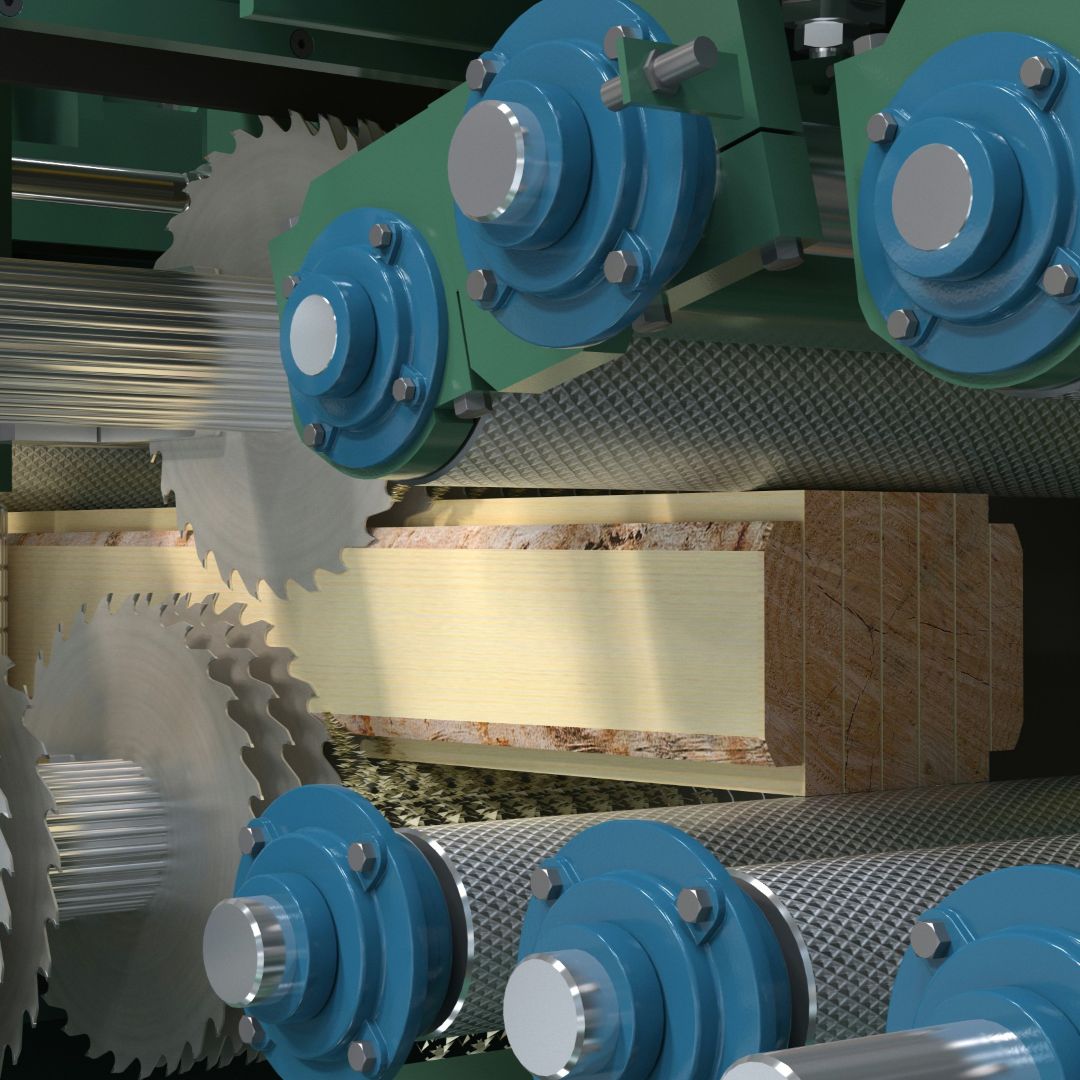
Ask ten sawmill operators how much horsepower is needed per saw, and you’ll likely get ten different answers. That’s because there is no single, universal number. Horsepower requirements depend on a complex interaction of wood, machine, saw design, and operating strategy. What’s often overlooked is that horsepower isn’t just a motor-sizing question, it’s a system-efficiency question.
At the foundation of horsepower demand is equipment condition. A well-maintained machine with properly aligned feed systems, sound bearings, and tight drive components will always require less power than one fighting friction and vibration. The same applies to saws themselves. Proper tensioning, sharp teeth, and plates sized correctly for the application reduce drag and prevent wasted energy. Before adding horsepower, many mills could reclaim capacity simply by restoring mechanical efficiency.
There are many factors that determine the consumption of power in various sawing situations. As you can see in the three commonly used formulas below, none of them contain enough variables to be accurate and none of them account for saw and saw tooth vibration.
Points to Ponder
Wood Matters More Than You Think
Even when cutting softwoods, not all species behave the same at the saw. Spruce and fir generally cut with relatively low resistance, while pine falls into a low-to-moderate range depending on variety. Douglas fir, larch, and especially hemlock demand significantly more power due to higher density and fiber strength. Denser softwoods translate directly into higher horsepower per saw.
Moisture content also plays a major role. Green wood typically requires 10–25 percent more horsepower than partially dried stock. Wet fibers deform plastically instead of fracturing cleanly, increasing friction and energy consumption. Mills pushing green material at high feed speeds often underestimate how sharply horsepower demand rises.
Kerf Width: The Biggest Lever
Among saw design variables, kerf width has the largest impact on horsepower. Quite simply, removing more wood requires more power. Horsepower scales with kerf width, feed speed, and depth of cut. Older solid-plate gangs commonly ran side clearances of between 0.030” and 0.040”, while modern designs fall closer to 0.020–0.025 inches. That reduction alone can lower horsepower demand per saw by 20–40 percent—a dramatic improvement without sacrificing production.
Tooth pattern also influences power draw. Aggressive hook angles between 20 and 30 degrees tend to reduce average horsepower requirements, though they can introduce vibration if pushed too hard. The number of teeth in the cut and proper gullet design also help in expelling sawdust. This helps to keep the saws from overheating and snaking in the cut which negatively affects horsepower.
Cut Geometry and Feed Rate
Depth of cut is another linear factor. An eight-inch cant requires roughly twice the horsepower of a four-inch cant at the same feed speed. Likewise, the number of teeth engaged in the cut effects how power is delivered—more teeth require more horsepower.
Feed rate remains the most direct, operator-controlled variable. Doubling feed speed nearly doubles horsepower demand. Light gang operations may run 200 feet per minute, while high-production mills can exceed 400 feet per minute. Many older mills controlled power limitations simply by slowing the feed, masking underlying inefficiencies.
** Our Cutting Tool Specialist can optimize saw design to allow our customers to maximize their sawing efficiencies. **

Speed, Losses, and Reality
Saw rim speed must be matched to the application. Typical circular saw velocities range from 9,000 to 12,000 feet per minute. Too slow, and the saw tears rather than cuts, spiking power loads. Too fast, and windage loss and heat generation waste energy. Proper speed minimizes horsepower per unit of material removed.
Mechanical losses are frequently forgotten in calculations. Bearing friction, belts, gears, arbor windage, and misalignment all consume power without adding production. A practical rule is to add 10–20 percent to calculated cutting horsepower to account for these losses.
Warning Signs
Signs of insufficient horsepower include feed stalling, RPM drop, washboarding, and blueing of teeth. Conversely, excessive horsepower can cause vibration, tooth breakage, plate heating, and unnecessary energy waste.
Takeaway
Sizing horsepower for sawing isn’t about finding a magic number. It’s about understanding the full cutting system: species, moisture, kerf width, depth of cut, feed speed, saw speed, mechanical condition, including saw diameter, and duty cycle. When those variables are aligned, horsepower becomes an efficiency tool rather than a limitation.
There is no universal answer—only the correct horsepower for your exact cutting conditions.
Découvrez nos nouvelles et événements


Commençons
Nous avons l'avantage de vous aider à bien faire le travail.
Tous nos outils sont conçus pour être précis, durables et pour vous aider à faire n'importe quel travail facilement. Lorsque vous travaillez avec un produit Burton Mill Solutions, vous travaillez avec un équipement qui dépasse les autres.


