Tech Talk: The Importance of Circle Saw Guide Maintenance
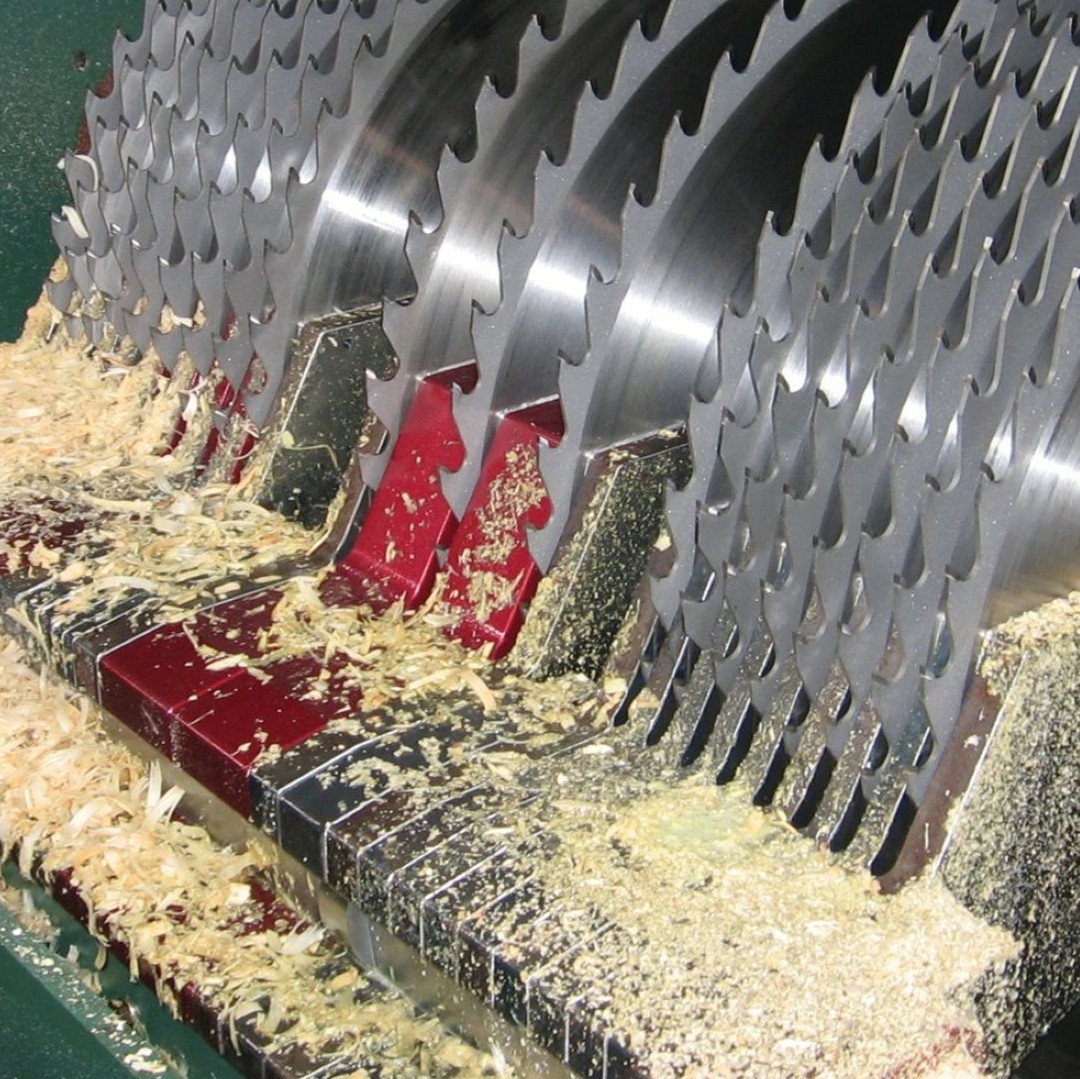
In guided edgers and gang saw machines, guide condition is just as important as saw tensioning, tooth geometry, and machine alignment. Even a perfectly maintained saw cannot cut accurately if the guides are worn, misaligned, poorly lubricated, or improperly adjusted.
Guides stabilize the saw during cutting and help control vibration, side loading, and other cutting forces. When guide wear allows excessive saw movement, the result is wandering cuts, sizing variation, reduced lumber recovery, and shorter saw life.
Regular inspection of guide wear, alignment, lubrication, and clearance settings is essential. A well-maintained guide system helps maximize accuracy, recovery, and overall machine performance.
Function of Saw Guides
Circle saw guides exist for one primary purpose: controlling lateral movement of the saw plate. During operation, every saw experiences side forces created by varying wood density, changing grain direction, knots, feed fluctuations, and natural variations in log or lumber geometry. Without guides, these forces would allow the saw plate to move excessively, resulting in wandering cuts, poor lumber accuracy, and rapid saw fatigue.
Guides do not replace proper saw tensioning; rather, they work in conjunction with the tensioned plate. A correctly tensioned saw operates efficiently because the plate naturally resists distortion. The guide system provides support when cutting forces attempt to push the blade beyond its intended path.
A useful way to think about guides is that they allow the saw to remain free when cutting conditions are ideal while providing restraint when instability begins to develop.
The Relationship Between Guides and Saw Stability
Gang machines present challenges not found in many other sawing applications. Multiple saws are mounted closely together and operate at high rotational speeds under continuously changing loads. Because of the close spacing between saws, instability in a single blade can affect neighboring blades, creating vibration patterns that impact the entire saw cluster.
When guides are correctly maintained and adjusted:
- Saws track straighter
- Lumber thickness variation is minimized
- Surface finish improves
- Vibration levels decrease
- Heat generation is reduced
- Saw life increases
When guide maintenance is neglected, the opposite occurs. The first symptoms are often subtle. Operators may notice occasional thickness variations, increased noise, or slight sawing deviation. Over time, these small issues develop into chronic problems that result in reduced recovery and excessive maintenance costs.
Understanding Guide Contact and Lubrication
Most guided circle saw systems operate in what engineers would describe as a boundary or mixed-lubrication condition. A thin film of water, oil, or lubricant mixture exists between the guide face and the saw plate, but light contact still occurs. This controlled contact is necessary if the guide is going to stabilize the blade when cutting forces increase.
If the guides are set too far away from the saw, the blade can flutter or move laterally before the guides begin providing support. Conversely, excessive guide pressure creates friction, heat, and unnecessary stress in both the guide and the saw plate.
The goal is not zero contact. The goal is controlled, lubricated contact that allows stabilization without generating excess heat.
Guide Wear and Its Effect on Performance
Guide surfaces wear continuously during operation. Even small amounts of wear can significantly alter saw behavior.
Common guide wear conditions include:
- Uneven face wear
- Grooving
- Galling
- Embedded debris
- Pitch and resin buildup
- Thermal damage
As wear develops, guide surfaces lose their ability to contact the saw uniformly. Instead of supporting the plate evenly, pressure becomes concentrated in localized areas. This uneven loading increases friction and can create hot spots that affect saw tension and tracking.
Regular inspection and resurfacing of guide faces often resolve problems that appear to be related to saw performance.
Proper Guide Clearance Matters
One of the most important aspects of guide maintenance is establishing proper clearance.
Guides should be positioned close enough to immediately control movement but not so tight that they preload the saw excessively. The ideal setting varies with saw diameter, plate thickness, operating speed, guide design, and lubrication method.
As a general rule, guides should:
- Prevent visible lateral movement
- Allow free saw rotation
- Maintain uniform contact patterns
- Operate without generating excessive heat
- Function consistently throughout the operating temperature range
The best guide settings are often confirmed through performance observations rather than arbitrary numbers. Excessive heat, guide discoloration, smoke, or accelerated wear indicate guides are too tight. Flutter, washboarding, wandering cuts, or excessive vibration often indicate excessive clearance.
Lubrication and Cooling
Lubrication is as important as mechanical adjustment. The lubricant serves three critical purposes:
- First, it reduces friction between the guide face and the saw plate
- Second, it removes heat generated by contact and cutting forces
- Third, it flushes away contaminants such as sawdust, pitch, resin, and metallic wear particles
Inadequate lubrication allows temperatures to rise rapidly at the guide location. Excessive heat changes the tension characteristics of the saw plate and can accelerate fatigue cracking. A properly functioning lubrication system not only extends guide life but also helps maintain consistent saw performance throughout the production shift.
Conclusion
In guided edger and gang machines, circle saw guides are far more than simple support components. They are an active control system that stabilizes the saw plate, manages cutting forces, controls heat, and contributes directly to lumber recovery and product quality. Proper guide maintenance requires regular inspection, accurate alignment, appropriate lubrication, and careful adjustment. When these fundamentals are consistently applied, mills achieve straighter cuts, longer saw life, improved recovery, and more predictable operation.
Découvrez nos nouvelles et événements


Commençons
Nous avons l'avantage de vous aider à bien faire le travail.
Tous nos outils sont conçus pour être précis, durables et pour vous aider à faire n'importe quel travail facilement. Lorsque vous travaillez avec un produit Burton Mill Solutions, vous travaillez avec un équipement qui dépasse les autres.


