Tech Talk: Intro to Circle Saw Design
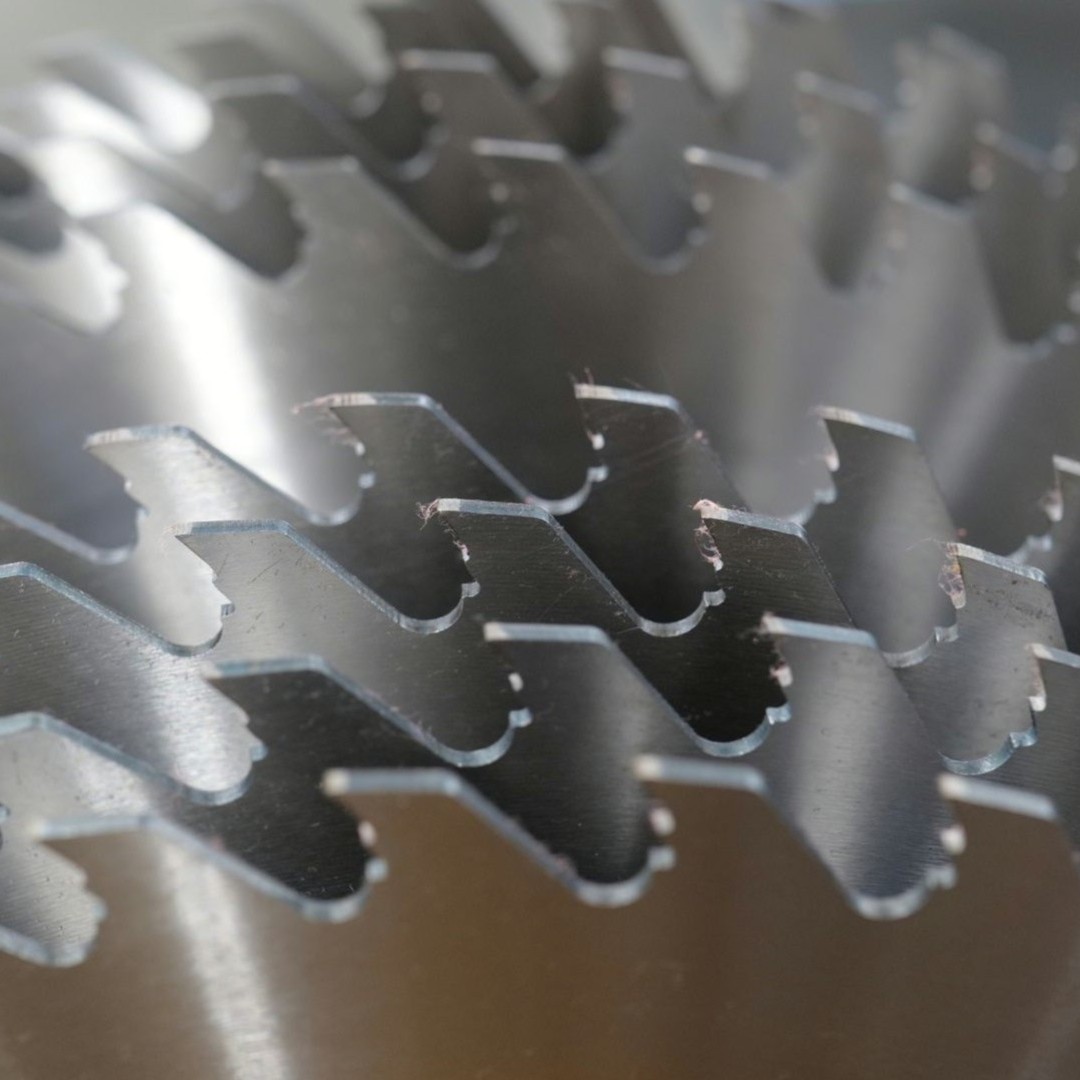
Circle saw performance in sawmill operations comes down to how efficiently each tooth removes wood while maintaining stability, chip evacuation, and surface finish. The saw's job is not to produce lumber. The saw's job is to produce and evacuate a chip that is the correct size and shape to reduce heat and improve sawing efficiency.
The four key concepts that drive that performance are:
- Tooth bite (chip load per tooth)
- Gullet capacity
- Feed speed
- Arbor speed (rpm)
Understanding how these interact is critical to selecting or designing the right saw.
Goals and Trade-Offs
Each design choice should be rooted in the saw's ultimate function and goals. How will you be using the saw and what do you want it to accomplish? This could range from saws that provide smoother and straighter cuts to ones that are more durable for longer run times.
More importantly, it's important to consider the trade-offs of each design choice. There's no one perfect design that provides every possible benefit. As you improve one aspect, the changes may make other functions more difficult for the saw.
For example, reducing plate thickness can result in increased recovery and yield while lowering per saw cost. However, this also often results in increased deviation, reduced saw life, reduced uptime, and increased saw and guide maintenance. Consider which benefits are worth the risks they come with by keeping your ultimate goals at the center of every design adjustment you make.
Key Design Variables
In circle saw design, there are four basic areas to focus on:
- Arbor speed (rpm) or rim speed of the saw
- Tooth Bite or Feed per tooth
- Number of teeth or tooth pitch
- Gullet area and shape
Today, we have software tools that assist with these design choices, analyzing tooth form and evaluating its performance before making the first cut. These tools will consider your goals and provide the right design based on need.
Understanding how to use these tools starts with knowing the circle saw design basics.
Arbor Speed (rpm) and Rim Speed
With circle saws Rim Speed can be calculated using the following formula:

Changing arbor rpm can greatly affect the saw’s ability to produce and evacuate a properly size and shape chip. It also has a direct impact on tooth bite as well as gullet capacity. Changing arbor rpm may also require a change in the amount of tension the saw needs to stand up straight in the cut.
When designing a saw tooth profile, it is critical to make sure that you have the correct arbor rpm. If not, you are setting yourself up for failure from the start.
Tooth Bite
Tooth bite is the thickness of material each tooth removes as it passes through the cut. It’s calculated using the following formula:

As you increase feed speed, tooth bite increases as well.
Tooth bite determines a wide range of results, including cutting efficiency, power consumption, heat generation, surface finish, and tool life.
A bite that’s too small can result in teeth rubbing (as opposed to cutting), excessive heat generation, poor energy efficiency, and excessive side loading. It can often be fixed by lowering rpm, reducing the number of teeth, and increasing feed speed.
A bite that’s too large can overload the tooth and cause vibration, chatter, or tooth breakage. It can also lead to a rough finish and possible plate instability. This can be corrected by increasing rpm, increasing the number of teeth, and lowering feed speed.
Bonus tips! For carbide-tipped saws, tooth bite should not exceed 50% of the plate thickness. For Stellite-tipped saws, tooth bite should not exceed 70% of the plate thickness.
Number of Teeth
When a saw isn’t performing as desired, tooth count is often the culprit. When looking for a finer cut, it’s tempting to add more teeth, but too many teeth can actually be detrimental to your processing line.
Too many teeth can result in slower cuts, saws that are harder to feed, increased amp/load on a saw resulting in excessive horsepower use, saw instability from excessive heat generation, and weaker tooth design.
Reducing the number of teeth on a saw can resolve many of these issues. Fewer teeth often works best on thick materials and will help your saw last longer.
Gullet Capacity
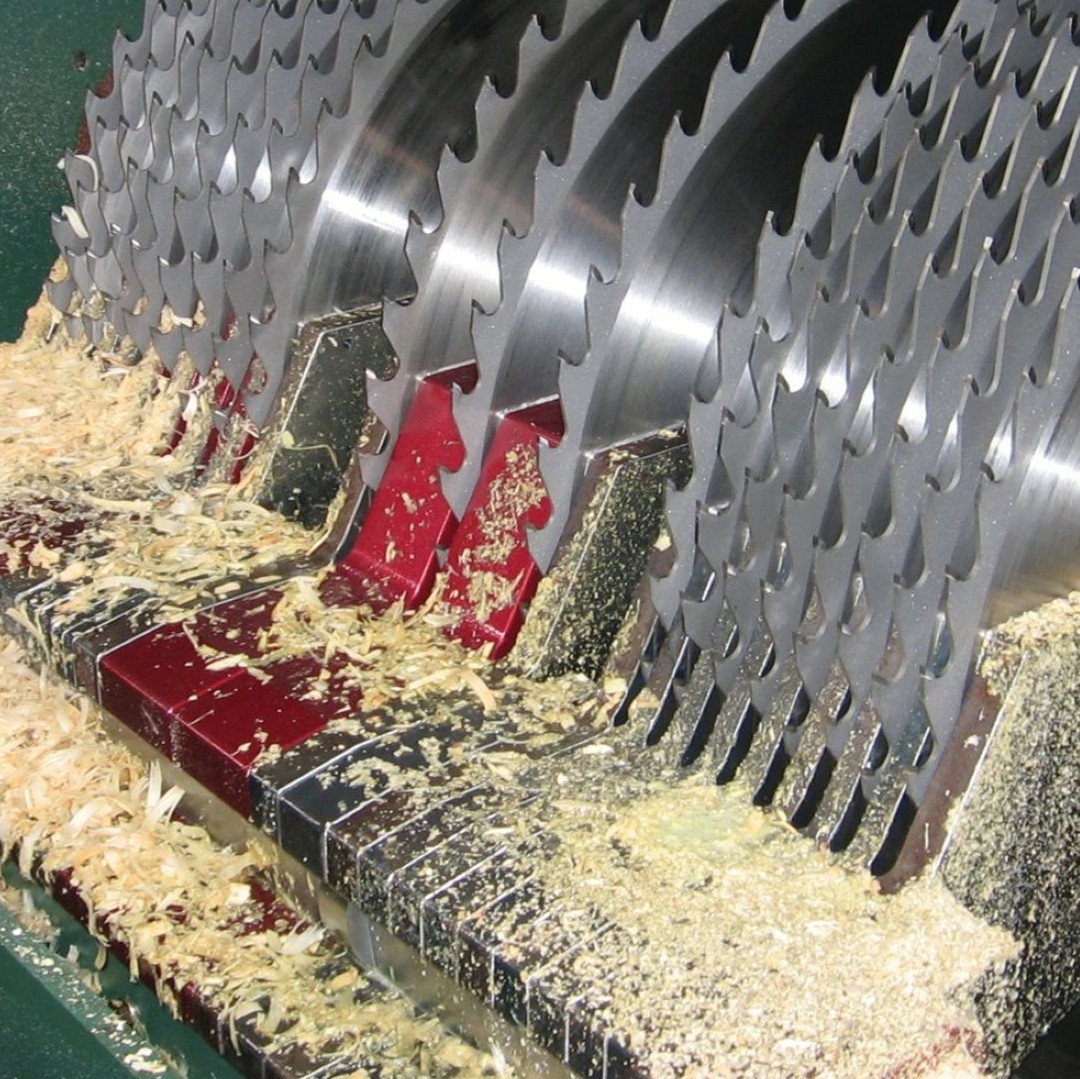
The gullet is the dip between teeth that carries chips out of the cut. Capacity levels are often determined by tooth bite and chip size. The larger the bite and the larger the chip, the more volume your gullet capacity will require.
Gullet capacity can be calculated using the following formula:

If the gullet capacity is too small, chips get packed in, sawdust spilling occurs which leads to heat buildup and saw wandering or deviation. If the gullet capacity is too large, it can lead to a rougher finish and lower productivity.
Ultimately, you want each tooth to be able to cut a chip (tooth bite), hold that chip (gullet capacity), and then clear it away before re-entering the material.
Feed Speed (fpm) vs Arbor Speed (rpm)
Balancing feed speed and arbor speed is essential to proper saw performance. Feed speed controls material input rate and is directly linked to production rate. Arbor speed controls how often teeth engage with the material.
The two work hand in hand in controlling tooth bite and determining the correct number of teeth needed and correct gullet capacity necessary.
Balancing the System
Which brings us back to the beginning. What are your goals? What kind of results are you looking for? With your goals in mind, the key concepts here can help you determine proper saw design and production speeds.
For example, if you’re in a high-production setup, you’ll want high feed speed, moderate rpm, fewer teeth, and large gullets. This way, you’ll achieve high throughput and aggressive cutting, though the finish may be rougher.
Then again, if you’re looking for a nicer finish, you’ll want lower feed speeds, higher rpm, more teeth, and smaller gullets. It’ll lower the production rate, but the final product will have a smoother surface and it’ll apply less stress on the teeth.
Additional Examples
Additional common saws should apply the following variables
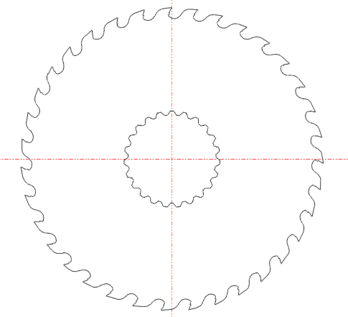
Primary Breakdown & Gang Saws
- Large bite
- Deep gullets
- Lower tooth count
- Emphasis on chip clearance
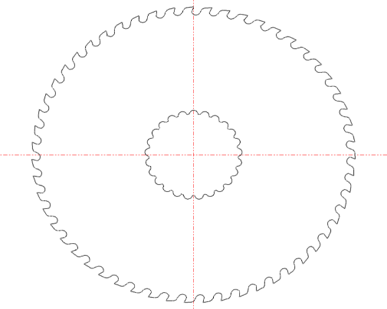
Board Edger Saws
- Balanced bite
- Moderate gullets
- Higher tooth count
- Mix of productivity and finish
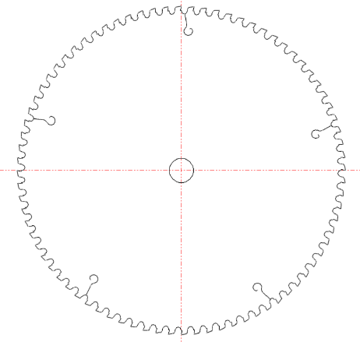
Trim Saws
- Small Bite
- High rpm
- High tooth count
- Small gullets
- Focus on finish quality
Calculating Horsepower
One additional formula you’ll need will help you calculate horsepower at the saw:

Common factors used for horsepower are:
- Softwood = 35
- Southern pine = 40
- Hardwood = 45
It’s important to note that there are many horsepower formulas and none of them cover all the parameters or conditions that exist in real world sawmill applications.
For example, using the above formula, we could calculate for 8” depth of cut, .104” kerf, 225 fpm feed speed for softwood material. This would give us 61.25 hp per saw line. However, this number may be on the high side of what’s needed. It’s generally better to have too much as opposed to not enough, but it’s still important to know the tendencies of the formula you’re using.
Other Common Problems and Their Solutions
There are a number of problems that can arise as you’re figuring out the right saw design for your facility, but some of the most common include:
- Burning – Tooth bite is too small (high rpm, low feed speed)
- Wavy cuts – Excessive tooth bite, not enough gullet capacity
- Tooth breakage – Bite too large or shock loading
- Saw heats up – Poor chip evacuation or rubbing
- Chips packing – Gullets too small for feed rate
Still Having Trouble?
Even with a solid knowledge base, troubleshooting saw design issues can be frustrating. It’s good to have an experienced partner you can call for help.
Burton Mill Solutions has dedicated Cutting Tool Specialists that can evaluate saw design and help you figure out the right shape for your needs.
Contact us today to schedule an appointment and ask about additional hands-on training.
Découvrez nos nouvelles et événements


Commençons
Nous avons l'avantage de vous aider à bien faire le travail.
Tous nos outils sont conçus pour être précis, durables et pour vous aider à faire n'importe quel travail facilement. Lorsque vous travaillez avec un produit Burton Mill Solutions, vous travaillez avec un équipement qui dépasse les autres.


