Tech Talk: Achieving Consistent Results
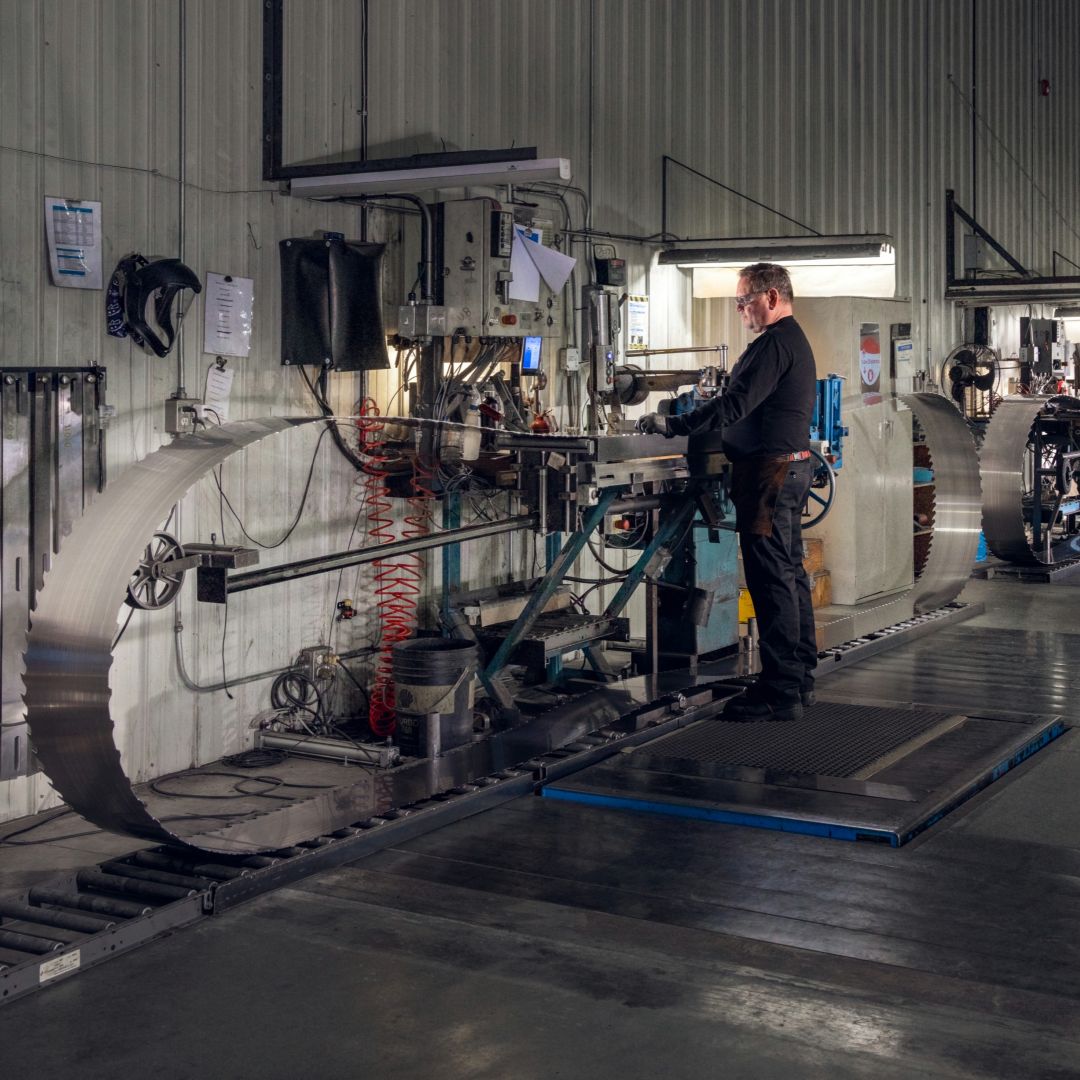
In most sawmills, lumber recovery, surface quality, and saw life ultimately trace back to one place: the filing room. While optimization systems, machine alignment, and feed control all matter, none of them can overcome inconsistencies in saw preparation. A well‑run filing room delivers predictability and sawing accuracy. An inconsistent one creates daily variability that operators may need to compensate for and possible extra downtime. Achieving consistent results in the filing room is therefore not just a maintenance goal, it is a production imperative.
Consistency Begins with Process, Not Skill Alone
Experienced filers are invaluable, but even the best craftspeople struggle to achieve consistency without standardized processes. Filing room success depends on repeatability: each saw must leave the room as close as possible to a known, correct condition. That requires defined procedures for incoming inspection, sharpening, tensioning, leveling, and final verification.
Documented standards - hook angle, side clearance, tip height variation, gullet shape, plate tension profile - create a common reference point. Without them, adjustments become subjective, and performance becomes dependent on who happened to work on the saw that day. Consistency improves dramatically when decisions are based on measurable targets rather than judgment alone.
Incoming Inspection Sets the Tone
Every saw entering the filing room should be inspected before any corrective work begins. Skipping this step increases the risk of chasing symptoms instead of addressing root causes. Incoming inspection should include checking for cracked gullets, uneven side wear, abnormal heat marks, loss of tension, and damaged tips.
Just as importantly, the filer should understand where the saw ran and what issues were reported. A saw that came off a guided edger for surface problems requires a different approach than one pulled from a gang saw for washboarding. Capturing this information consistently creates a feedback loop between the filing room and the mill floor.
Sharpening Consistency Drives Cutting Consistency
Sharpening is the most frequent filing room operation, and small inconsistencies here have outsized effects. Variations in kerf, side clearance, cutting angles, or tooth geometry change cutting forces and load distribution, which directly affect tracking stability and heat generation.
Consistent sharpening requires:
- Properly maintained sharpeners or grinders
- Calibrated cams, templates, and stops
- Routine checks for wheel wear and alignment
Grinding wheels themselves are often overlooked. Dull, glazed, or improperly dressed wheels introduce variation even when machine settings are correct. A correctly shaped and dressed wheel is essential for repeatable results. Automated wheel dressers take the guesswork out and assure consistent results no matter the operator.
Tensioning and Leveling must be Systematic
Tensioning is one of the most critical - and least forgiving - elements of filing room work. Inconsistent tension profiles are a leading cause of unpredictable saw behavior, including flutter, lead changes, and premature cracking. Each saw diameter, plate thickness, and operating speed requires a specific tension pattern. Applying too much, too little, or placing it incorrectly leads to variability that no guide or alignment adjustment can fully correct.
Leveling should never be rushed or treated as optional. Even small unlevel spots or sections can cause uneven guide contact and localized heating. A consistent approach means checking the entire plate, not just obvious problem areas, and confirming results rather than assuming success.
Measurement and Verification Close the Loop
The most effective filing rooms verify their work before releasing a saw back to production. This includes checking:
- Side clearance consistency of the tip
- Tip height variation
- Plate runout and flatness
- Tension profile
- Back length on bandsaws
- Guide condition and accuracy
Using gauges, indicators, and tension tools consistently removes guesswork. When measurements are recorded, trends become visible - allowing teams to spot systemic issues before they affect production. Verification also builds confidence between the filing room and operations, reducing unnecessary saw changes driven by uncertainty.
Cleanliness and Organization Matter More than they Seem
A cluttered, dirty filing room makes it difficult to achieve consistent results. Pitch buildup on saws, debris on benches, and mixed tooling create opportunities for error. Organized tooling, labeled fixtures, and designated work areas reduce variation and speed up work without sacrificing quality.
Consistency thrives in environments where tools are easy to find, machines are kept clean, and procedures are followed in the same order every time.
Communications with Operations is Essential
The filing room does not operate in isolation. Changes in species mix, feed speeds, guide configurations, or machine condition all affect how saws perform. Without regular communication, the filing room may unknowingly prepare saws for conditions that no longer exist.
Regular feedback from operators—and just as importantly, feedback from the filing room to maintenance and operations—helps align expectations and prevent recurring problems.
Conclusion
Achieving consistent results in the filing room is less about heroic fixes and more about disciplined execution. Defined standards, systematic inspection, controlled sharpening, precise tensioning, and verified outcomes create repeatable saw performance. When consistency becomes the goal, variability drops, saw life improves, and mill performance stabilizes. In an industry where small changes produce large results, the filing room remains the beating heart of the sawmill.
Découvrez nos nouvelles et événements


Commençons
Nous avons l'avantage de vous aider à bien faire le travail.
Tous nos outils sont conçus pour être précis, durables et pour vous aider à faire n'importe quel travail facilement. Lorsque vous travaillez avec un produit Burton Mill Solutions, vous travaillez avec un équipement qui dépasse les autres.


